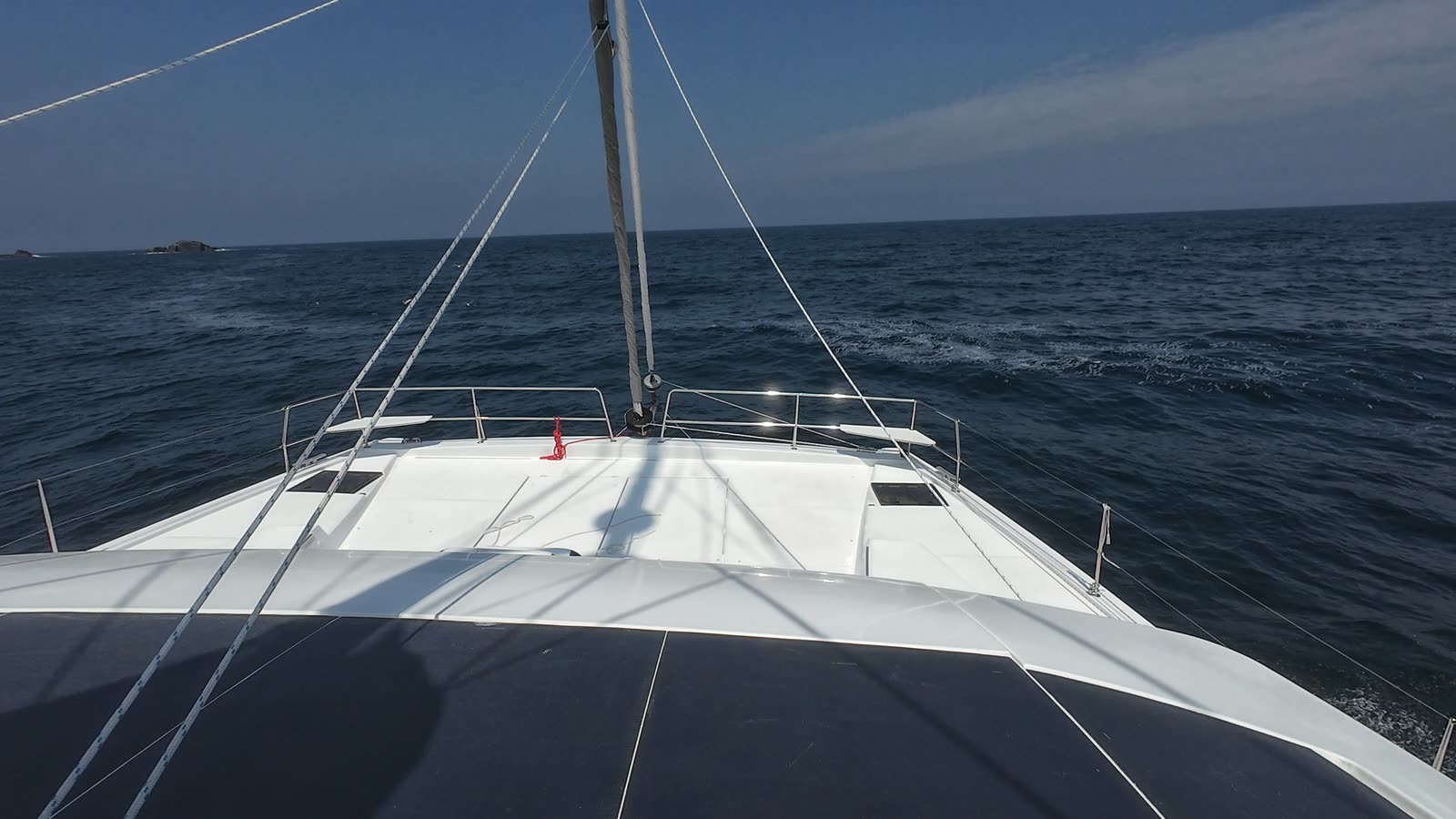
Sailing after AI
Cruising has changed less in thirty years than almost any other way of travelling. The next ten will be different. Here is what we think changes, and what must not.
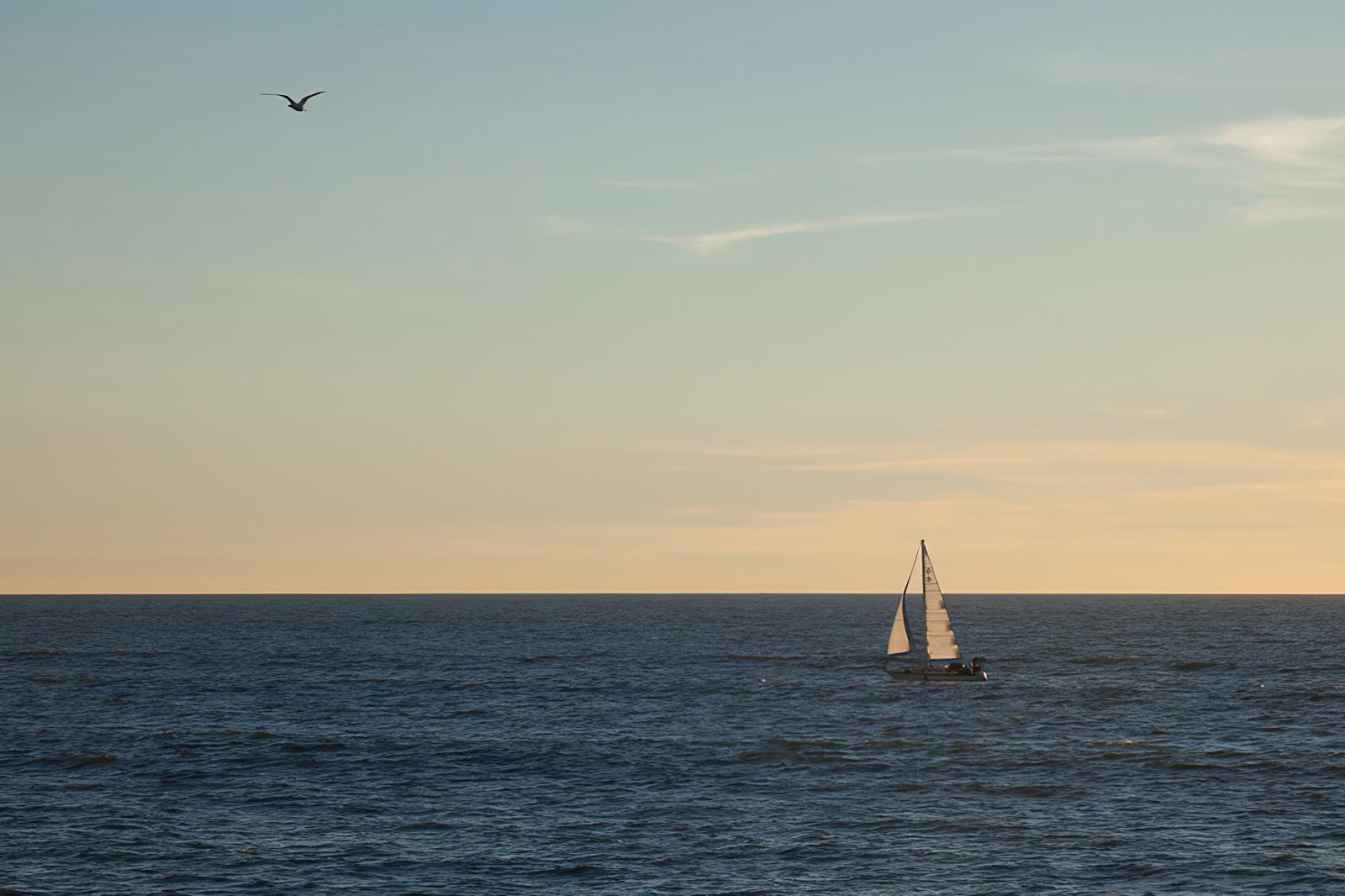
Think about how you travelled by car, by plane or by train in 1996, and how you travel now. Then think about a cruising sailboat. Charts went digital. Weather went online. Satellite phones got cheaper and then, almost overnight, boats got proper internet. But the core of cruising, the watch, the planning, the keeping of the boat, still runs on tired eyes, dog-eared pilot books and a locker full of spares.
We think that is about to change, for three reasons.
Boats are online
In the 2025 Atlantic Rally for Cruisers, 209 of the 226 boats carried satellite internet.1 A connected boat, even mid-ocean, is no longer the exception. That changes what software at sea can do: it can learn from every passage, update every night, and reach a crew wherever they are.
Intelligence got cheap
The cost of running advanced AI fell more than 280-fold between late 2022 and late 2024.2 Capabilities that once needed a research lab now fit in a sailor's budget. A professional-grade second pair of eyes, or a navigator who has read every pilot book, no longer has to cost what a professional crew costs.
Crews are small, and boats are complex
Boats on world voyages average fewer than three people aboard, and about one in six boats reaching Cape Town in 2024 was sailed single-handed.3 At the same time boats have grown more complex: multihulls now account for 74% of French sailboat-building revenue.4 More systems, fewer hands. Something has to give, and today it's usually the skipper's sleep.
What we think changes
Every boat keeps a lookout that never blinks. Not instead of the crew, but alongside them, through the long afternoon legs when attention drifts and the sun turns the sea to glare.
Local knowledge waits in the next port before you arrive, specific to your boat, dated and sourced. Not a forum thread from 2014, but the price for your length and beam tonight, the permit you need for that island, and the reason a seasoned skipper would anchor here rather than there.
A breakdown means a delivery, not a lost week. The right part, first time, meeting you at a port ahead instead of chasing you down the coast.
Good seamanship is recognised. Insurers have already started to reward vigilance: since September 2026, a leading yacht insurer halves the deductible on anchor-drag claims for boats with continuous anchor monitoring.5 We expect that to be the first of many.
And every boat that sails makes the water a little safer for the next one.
What must not change
The skipper stays in command. The sea stays the sea. Software that encourages a crew to stop looking out of the window is worse than no software at all. That's why our apps are designed as an aid to the watch and never a replacement, why they tell you plainly when they can't help, and why they never take a decision that belongs to the skipper.
We are building the crew that makes sure nothing important goes unnoticed. We think it will let couples and solo sailors go further, help new owners grow into good skippers, and give experienced ones more of what they came for: time on the water.
That's what we mean by sailing after AI.
- Yachting World, "Connected or consumed? The realities of Starlink for bluewater cruisers", June 2026. Link
- Stanford HAI, AI Index Report 2025. Link
- Jimmy Cornell, "Global Movement of Cruising Yachts", October 2025 (40 of 232 boats). Link
- katamarans.com, "The Catamaran Market in 2026", July 2026, citing FIN data. Link
- Marine Industry News, on Pantaenius's anchor-monitoring deductible, 2026. Link