The lines you can't see
Ask a cruiser what ended a passage early and you'll often hear the same answer. Not a storm. A pot line around the propeller.
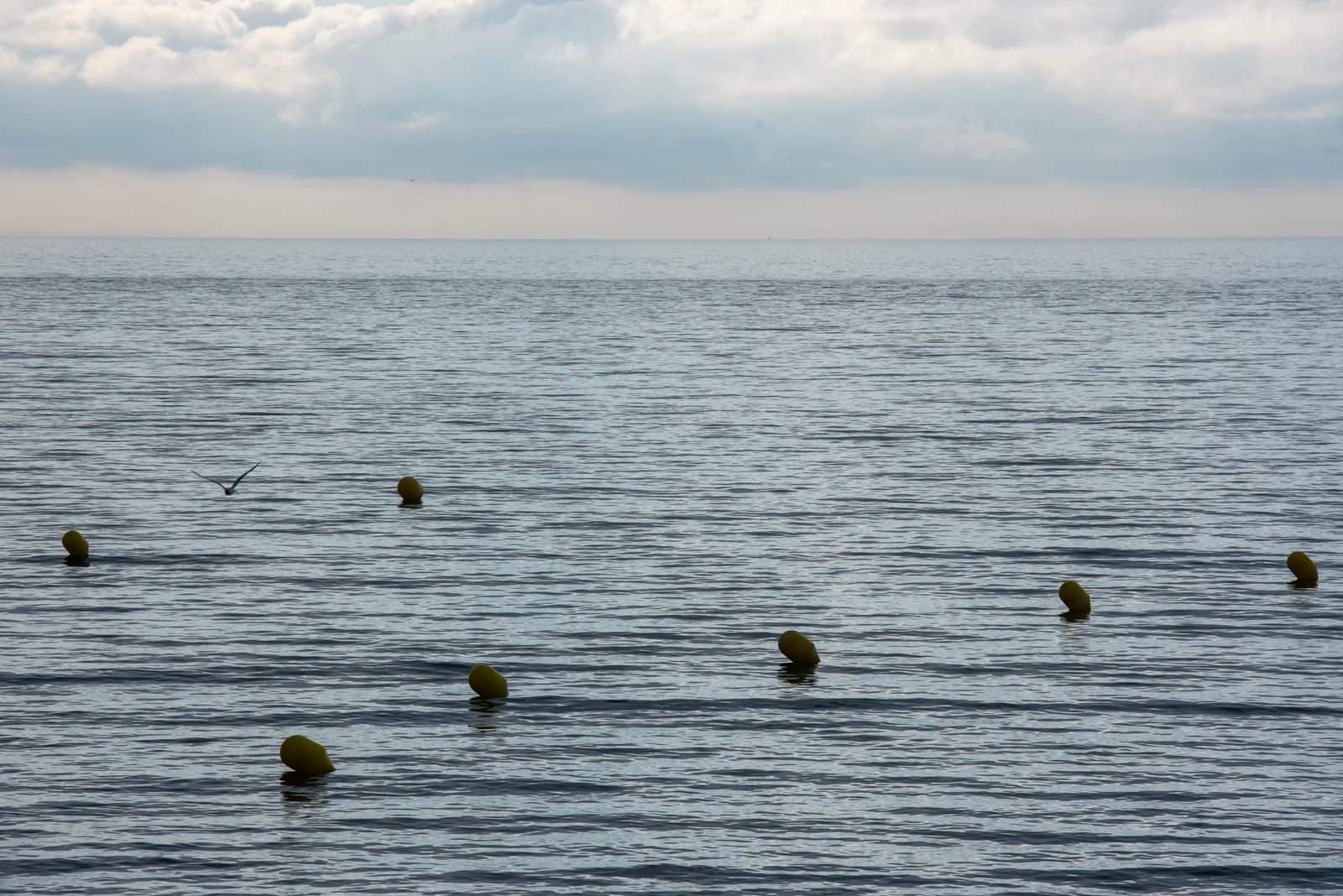
Anyone who has sailed the coasts of Galicia, Portugal, Brittany or Maine knows the feeling: a sea that looks empty, until it isn't. A small float, often dark, sometimes with a tired flag, sometimes with no flag at all. Below it, a line running down to a pot. Sometimes a second float twenty metres on, and the line between them invisible.
What happens when you catch one
The best case is a calm anchorage and a swim with a knife. The worst is a wrapped propeller in a rising sea, a damaged shaft, saildrive or rudder, an engine that won't restart, and a passage that ends at the nearest port, or with a call for help.
The numbers are hard to come by, because most fouled propellers are never reported. But where they are counted, they're sobering. In 2024 the US Coast Guard recorded 109 boating accidents that began with hitting a floating object, with 9 deaths, 44 injuries and $3.8 million of damage.1
Why there's more of it
The sea holds more lost gear than ever. Researchers estimate that about 2% of all fishing gear is lost at sea every year, including more than 25 million pots and traps.2 Lost gear keeps floating, unmarked and unattended, and it doesn't stay where it was lost.
Meanwhile the busiest cruising coasts are also busy fishing grounds. Pot fields cluster off headlands, river mouths and harbour approaches: exactly where a cruising boat slows down, turns, and has its crew busy with sails, fenders and lines.
What good crews do today
- Keep a dedicated lookout in gear-heavy waters, especially off headlands and harbour approaches.
- Avoid coastal passages at night where pots are known to be thick, and give headlands a wide berth.
- Fit a rope cutter to the shaft or saildrive, and carry a mask, a knife and a plan for clearing a wrap.
- Slow down in pot fields, and stay off the engine when you can sail through.
- Share what you see with other crews on the same coast.
All of that works. All of it also depends on someone watching the water, hour after hour, often in glare, often short-handed.
Where we come in
That's the gap Sailwatch Ahead is built for: a second pair of eyes that doesn't tire, telling the helm what's ahead, which side, how far and how soon, loud enough for the crew below to hear. It's an aid to the watch, never a replacement, and it's honest when conditions limit what it can see.
We're testing it with founding crews in Atlantic Spain and Portugal in summer 2027. Read more about Ahead, or apply to join the pilot.